Friday, December 22, 2006

Radiocarbon for Christmas

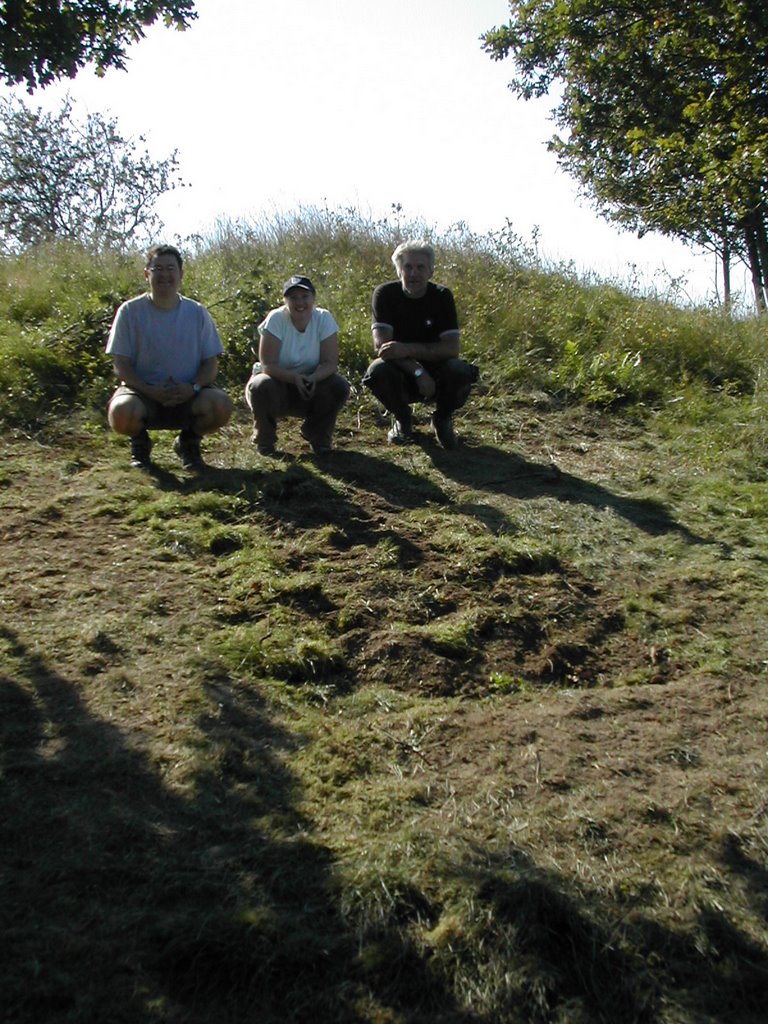
Back in September I told you about a little dig that I did with my friends and colleagues Howard, Libby and Peter at Stora Tollstad, Sjögestad parish, Östergötland. We dug a small peripheral trial trench into a great barrow (Raä 16) and found a thick charcoal layer underneath it.
Yesterday Tomasz Goslar of the Poznan Radiocarbon Lab sent me the results of analyses of charcoal from the barrow. Ulf Strucke had kindly identified two pieces for me with a low innate age: one of Norway Spruce (Picea abies, Sw. gran) and one of Goat Willow (Salix caprea, Sw. sälg). The willow material, being a thin twig, should date the cremation pyre at the site (although we found no bones at its periphery). And the analyses came out beautifully!
Spruce. Poz-18592. 1265±30 BP. 685-775 cal AD (1 s).
Willow. Poz-18593. 1210±30 BP. 775-875 cal AD (1 s).


The Sjögestad barrow was clearly erected in the late 8th or the 9th century AD, that is, the Late Vendel or Early Viking Period. This fits well with the dates of similar barrows in the Lake Mälaren area and rules out a Bronze Age date, the other big barrow period in Swedish prehistory. And behind every great barrow lurks a powerful group of mourners...

[More blog entries about , , ; , , .]

Labels: , ,

Wednesday, October 25, 2006

They're Digging In Sigtuna


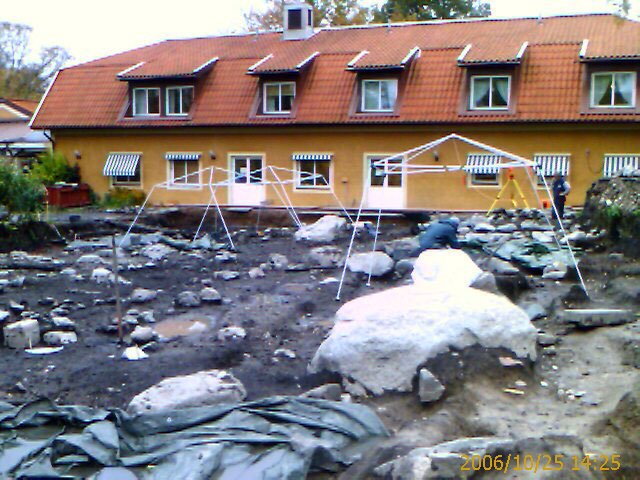
This afternoon I drove up to Sigtuna to check out the excavations there. A treatment centre for MS sufferers are building an extension to their premises, which has given my colleagues an opportunity to dig a big whopping trench a stone's throw from the town museum. Anders Wikström heads the dig and he's got quite a team, including a number of archaeology PhDs waiting for the Boomers to retire from the universities. They've been digging since late May, and yesterday they were all absolutely drenched by rain.


The town of Sigtuna was founded in the late 10th century as a successor to Birka. Unlike Birka, it was a Christian centre and soon received a great number of stone churches, one of which was the first brick building in the Lake Mälaren area. But Sigtuna's heyday was brief and power moved on to Uppsala and Stockholm. Since about AD 1200, the town has been a quiet little place. American tourists always find it entertaining that its name sounds like "sick tuna".


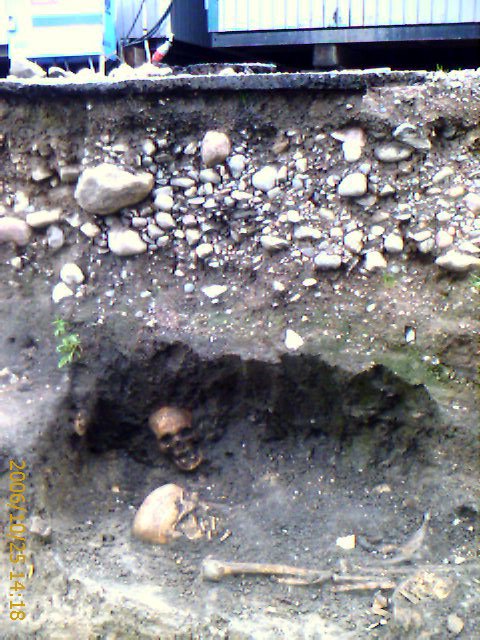
The site under excavation has been farmland since the Late Middle Ages, so the team came down into 11th century urban layers really quickly. The stratigraphy is only one to two meters deep with a lot of subsoil contour. Part of the trench holds the edge of a Medieval churchyard with over 200 burials excavated so far. Interestingly, this is the first time in Sigtuna that a churchyard is found dug into earlier urban strata. This would indicate that the churchyard post-dates a re-planning event, possibly having to do with a processional street established to take celebrants around every church in town. This street has been clearly identified in the current dig. Before that, the area held unusually large and unusually orientated buildings, bringing to mind the high-status long houses on earthen platforms along the northern edge of the dense proto-urbanisation at Birka. So far, though, there are no strong indications of any wealthy inhabitants of the houses.

[More blog entries about , , ,, ; , , , .]

Labels: , , ,

Wednesday, September 13, 2006

Mission Accomplished, Return to Base

This morning Libby dug through the charcoal layer, which turned out to be more than half a meter thick, and found the natural yellow subsoil. Then Howard drew the four sections and we backfilled the mofo. Here's what it looks like now. (I'll add earlier pix to the two previous posts.)


In the afternoon we visited our colleagues at the County Museum and returned the gear they so kindly had lent us. And Emma Karlsson showed us her beautiful grave finds from Kvarnbacken outside Vadstena: imagine a High Medieval execution site full of decapitated skeletons, located on top of a Viking Period cemetery! One of the graves will become a classic: five silver coins (tpq AD 880), an elderly lady with early 9th century jewellery, a little girl with late 9th century miniature jewellery, Insular silver mounts in a geometric style adapted as pendants, a unique bone crucifix, and more. I was very flattered and grateful that Emma and the others would show us their finds and were interested in my ideas about them. And they fed us buns!

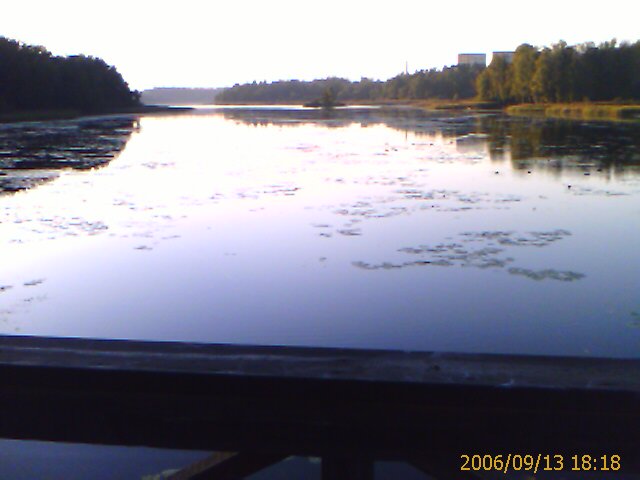
After farewells to Peter we went to Skavsta airport where H&L rented a car to explore in for the rest of the week. I drove home listening to the R.U. Sirius Show podcast, and stopped to take a geocache at the wooden pedestrian bridge across Lake Magelungen south of Stockholm. Beautiful hazy sunset, men sauntering down to the lake with fishing rods.


[More blog entries about , , , ; , , , , .]

Labels: , ,

eXTReMe Tracker