High Medieval Farmstead

Iron wire brooch from Sommaränge, 14th century AD. Diam 27 mm.
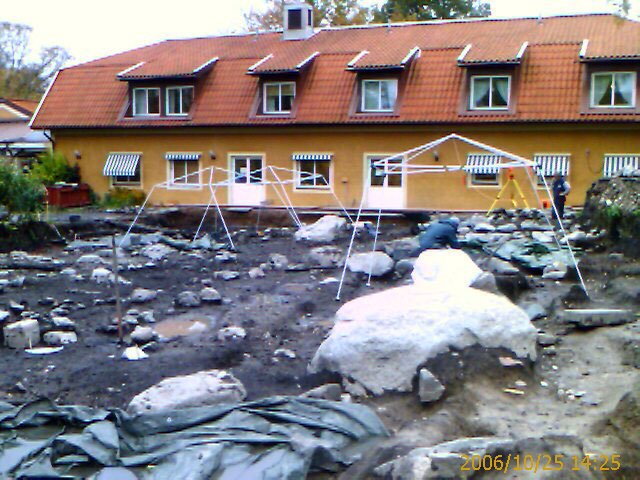
The other day I received a copy of a new excavation report, produced by a number of close friends and dear colleagues at the SAU excavation unit in Uppsala. Three years ago, Emelie Schmidt Wikborg headed the excavation of a High Medieval farmstead at Sommaränge in Viksta parish, Uppland. I visited the dig once together with Emelie's hubby, my friend Jonas Wikborg, and I've followed the post-ex work, so it's great to see what came of it.
The building remains were pretty woolly due to the rural Medieval habit of erecting houses on wooden frames supported on easily removed stones instead of the age-old way with postholes. But there had been at least five houses including a smithy, and in addition there was a still-functioning well and the remains of a simple brick kiln. The site produced unusually many finds, including a surprising amount of metalwork with an aristocratic flavour: weaponry, spurs, dress ornaments, furniture mounts, combs and lots of horseshoes. This was at least partly thanks to the wise use of metal detectors before and after de-turfing. Check out the finds drawings by the great Stefan Kayat, who illustrated my doctoral thesis! The people who lived here were clearly a cut above the standard Medieval peasant.
The reasons that I like Sommaränge particularly are a) the number and quality of the small finds, which are always close to my heart, and b) the fact that the farmstead can pretty confidently be identified with a place mentioned from 1323 to 1482 in the written sources. It subsequently disappeared from the records: Giplinghe farm, or as it would be written in modern Swedish, Gipplinge. The excavation area was on the border of two villages that have historically fought over the land, probably because the marginal Gipplinge's demise did not take place in such a way that the rights to its land were entirely clear afterwards.
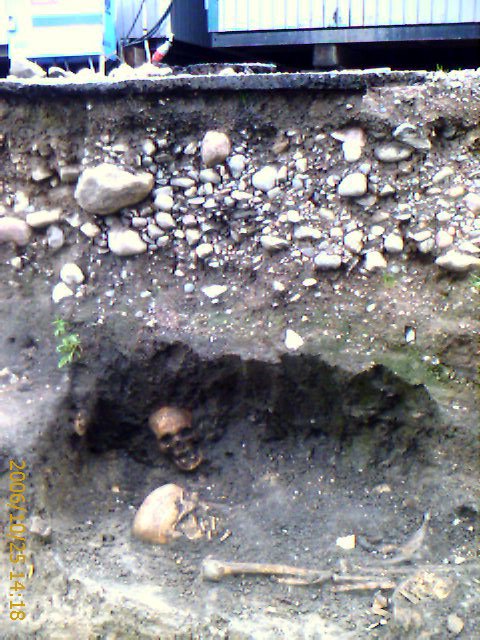
The dig also covered graves from the Bronze Age and Migration Period along with Late Neolithic and Bronze Age settlement remains, including a number of impressive burnt-stone mounds and rare Early Bronze Age metalwork. These prehistoric remains are treated in a separate report by Camilla Forsman and Helena Victor that hasn't appeared yet.
Emelie's a resourceful person. She keeps moving in and out of field archaeology and thus never seems to be unemployed: for a while she worked in the telecoms industry, then back to the trenches, and now she's with the state property management service. She's also an ex-punk chick and a rural culture geek who knows how to sing the cows home, milk them and make cheese. No wonder Jonas grabbed hold of her on her first dig and hasn't let go since.
The report isn't on-line here yet, but if you're into the real Middle Ages beyond the tournaments and castles and banquets, then you should get hold of a copy. Good stuff that you don't see every day.
Schmidt Wikborg, Emelie. 2006. Från gård och grund uppå Sommaränge Skog. Medeltida bebyggelselämningar i Viksta socken, Uppland. SAU Skrifter 15. Uppsala. 224 pp. ISBN 91-975994-4-1.
[More blog entries about archaeology, medieval, Sweden; arkeologi, medeltiden.]
Labels: archaeology, medieval, middleages, Sweden
posted by Martin at 16:33
1 comments