 Dan Zahavi
The other day I was checking out job ads at the web sites of Scandinavian universities, when I happened upon something that intrigued me. The University of Copenhagen is looking for a doctoral student in subjectivity research.
Center for Subjectivity Research invites applications for a Ph.D fellowship for 3 years in the area of subjectivity research with special focus on the relation between core self and extended (narrative) self. [...]
The Center for Subjectivity Research is an interdisciplinary research center under the directorship of Professor Dan Zahavi. The fellowship is open to applicants coming from a variety of disciplinary backgrounds. Projects involving both theoretical and empirical perspectives will, other things being equal, be preferred.
It is recommended that those interested in applying should orient themselves concerning the research program and the activities of the Center by consulting its website: www.cfs.ku.dk.
Neither my core self nor my extended (narrative) self understood any of this. But I had a very bad feeling about it. To someone with my scientific ideals, "subjectivity research" sounds about as good as "contaminated samples studies", "heavily biased sociology" or "studies in sub-atomic physics performed while tripping on acid". So I tried to learn more.
The Center's web site explains that they place particular focus on the question whether subjectivity can be explained on the basis of principles and models that the natural sciences use and accept.
Is it ultimately possible to account adequately for the first-person perspective and the experiential dimension from a third-person perspective? ... The research of the Center is divided into three parts-the first focusing on phenomenology and philosophy of mind, the second on hermeneutics and philosophy of religion, the third on psychopathology. ... An investigation comprising philosophy of mind, philosophy of religion, and psychopathology is unorthodox. But the complex problem of subjectivity demands an unorthodox approach, one that integrates a diversity of complementary theoretical and empirical investigations.
This, Dear Reader, is seriously spacy stuff. This is Timothy Leary's and Robert Anton Wilson's old turf.
And the Center isn't just a guy with a desk, either. Fifteen people appear to work on the Center's premises, and it's got nine affiliated scholars at departments for Bible exegesis, systematic theology, philosophy, medical anatomy, psychology, neuroscience and mental health, one even being the lit-crit editor of the main Danish newspaper,
Berlingske Tidende! Starting 2002, the state of Denmark (pop. 5.4 million) has been pumping some serious money into this effort. And I don't even understand what it is they seek to achieve. But I like the empirical bit. My fears are pretty much assuaged. This is not likely to be all verbiage.
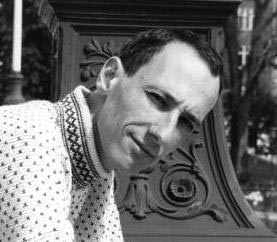
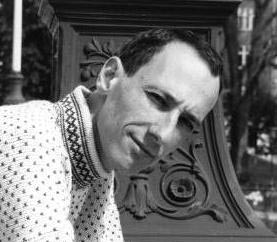
The Center's director, Dan Zahavi, is only 39, but clearly a hard-working, talented and ambitious man. He's a philosopher of the Continental persuasion, specialising in phenomenology, consciousness studies and the works of Husserl. This suggests that if the Center realises its goal, then it will have a very hard time explaining to people like me exactly what they found out. We just don't speak their language. And it makes me wonder if even the Center's various staff members and affiliates understand each other.
As for "whether subjectivity can be explained on the basis of principles and models that the natural sciences use and accept", well, that's a yes/no question. I should be able to understand the answer to that. Though to my mind it appears implicit in rationalist science that the answer is yes. Because otherwise we would have to believe in discredited old superstitions about an immaterial soul.
I wonder when the Center's answer is due.
[More blog entries about philosophy, phenomenology, Denmark; filosofi, fenomenologi, Danmark.]Labels: Denmark, philosophy

 Frederick received farmer Sørensen, took a look at the find and immediately bought every single piece of it. This meant that the hoard didn't enter the state collection housed in the museum, but became the property of the king himself. He promptly commissioned an excellent publication of the find by J.J.A. Worsaae, which appeared in 1853. And then, in 1859, the royal apartments at Frederiksborg castle burned down and the king's collection was largely destroyed.