Leifeng Pagoda

The site still retained its fame, being associated with the story of Lady White Snake, and even Mao made an official visit to the ruin mound of the pious old king. Times changed, and in 1999 the burghers of Hangzhou decided to rebuild the pagoda as part of their investments in West Lake tourism. Archaeologists were called in to excavate, and the structure's various incarnations were identified all the way back to the 10th century crypt where the lock of hair had been housed. A considerable amount of fine votive metalwork was also unearthed, some of it having been antique already when deposited, indicating that the looters had good reason to target this particular site.
Until recently, Chinese reconstructions of ancient buildings have been pretty brutal, often obliterating the remains of the original structures. The philosophy seems to have been "we want to show the tourists something we can be proud of, not just crappy old ruins". The tourist-friendly parts of the Great Wall, where not a single original stone can be seen, are a case in point. But recently, a more respectful attitude has been adopted. In 2002 a magnificent new octagonal five-story pagoda was inaugurated on Thunder Top, yet again dominating the West Lake's southern skyline. But the new structure stands on steel stilts with the remains of its predecessors preserved and displayed in situ in the basement.
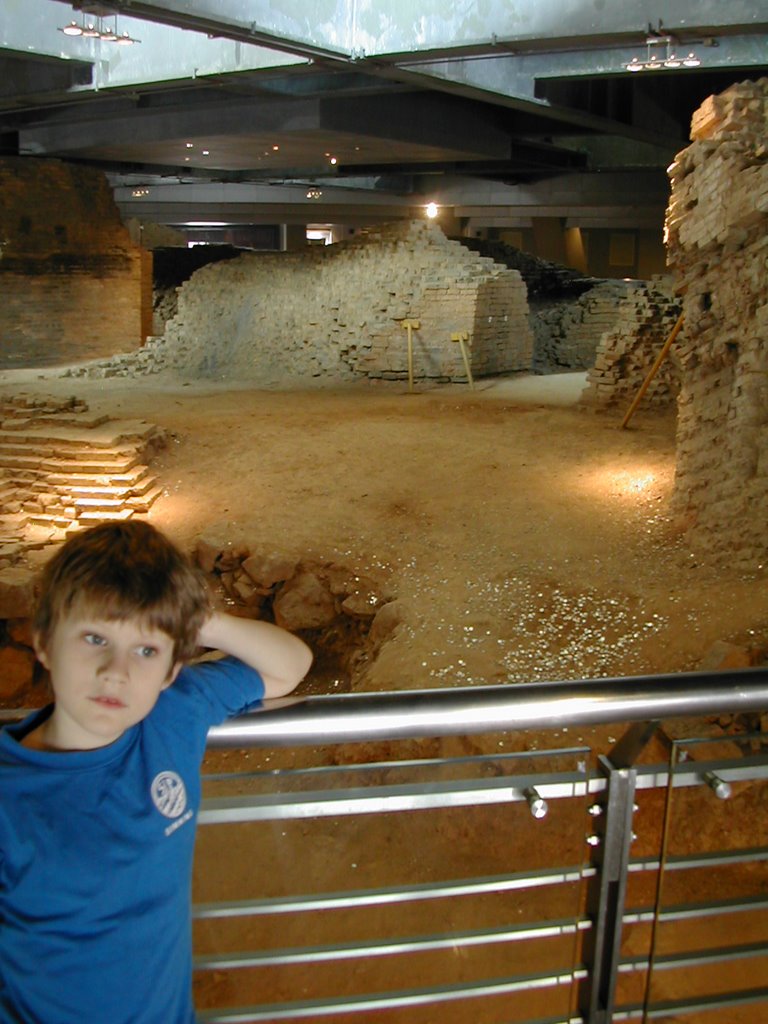
Visitors toss droves of coins onto the old brick walls. I wonder if many of them do so out of piety. Buddhist cult with incense-burning and praying is encouraged outside a building at the foot of the hill housing a silver reliquary found by the archaeologists. It's the first time I've seen an archaeological find becoming the object of religious worship, as opposed to religious relics housed above ground attracting the interest of archaeologists.
The new pagoda looks great from afar. Close-up, it's pretty tacky like all modern Chinese re-imaginations of the past, unabashedly made of modern materials, its faux-copper columns painted with metallic plastic. It's basically a fancy lookout tower for tourists with display cases full of neo-classical Chinese artwork. But each age has of course rebuilt the thing for its own purposes and with the materials available. One day the 2002 version of Leifeng pagoda will also be excavated by curious posterity.
Labels: archaeology, Buddhism, China, tourism
posted by Martin at 07:07
7 comments


