Swedish Psychedelic Rock
Believe it or not, Dear Reader, but Sweden has produced a number of great psychedelic rock records. I'm going to tell you about three of my favourites, all of them with lyrics in Swedish, although the music is Anglo-American in style. But first some background.
The word "psychedelic" originally had nothing to do with music. It's a 1950s neologism meaning "mind manifesting". When hallucinogenic drugs began to become common, there was a debate among American psychiatrists about terminology. Should the drugs be seen as psychotomimetic, that is, do they mimic or cause (temporary) psychosis? This was the wary position. Or should they be seen as unlocking and manifesting a hidden positive potential in the human brain? This was the enthusiastic position, taken by people like Timothy Leary. Medical literature currently simply uses the word "hallucinogenic", since it's an accurate description of the substances' effect without entailing any hypotheses about the neurochemical nature of psychosis. And stoners say "psychedelic", particularly stoner musicians and their fans -- like me.
Psychedelic music was born in the 60s when rock and pop musicians discovered LSD and expressed their experiences with the drug through music. Albums commonly cited as the first examples of psych music are the Beatles' Revolver and the 13th Floor Elevators' Psychedelic Sounds, both released in 1966. One defining characteristic of the style is of course hallucinatory lyrics. But musically, it is largely a matter of the era's rapidly improving sound technology being used to produce weird otherworldly sounds, portraying the sensations produced by LSD. The Beatles' first psych song, "Rain" is heavily processed on all channels, some vocals even running backwards. "Tomorrow Never Knows" is a pounding, gibbering nightmare of tape loops. It would be very hard to produce convincing psych music using only acoustic instruments. It's music fulfilling Rimbaud's 1871 dictum that the poet should proceed through "long, immense and rational derangement of all the senses". Good psychedelic music can't be made while the musician is tripping, it takes a calculating artistic mind. Rational derangement.
So psych was born as pop. But a heavier streak was apparent already with the 13th Floor Elevators. Guitarists in the blues tradition quickly picked up the influences, along with new guitar effect pedals and amp feedback (which had first been committed to vinyl by the Beatles). Thus Jimi Hendrix, the great innovator of psychedelic rock, could make completely insane sounds live in a way that the studio-dwelling Beatles would never even attempt. His debut album Are You Experienced? from 1967 completed the sonic psych palette as we still know it. And people in Sweden were listening.
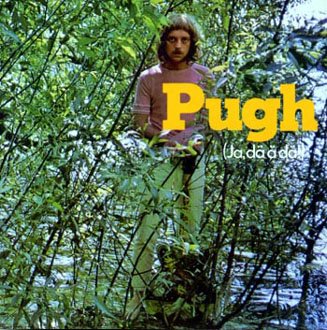 Our first great psych record is Pugh Rogefeldt's Ja, Dä Ä Dä from 1969. (The title means "Yes it is" in an exaggerated rural dialect, from one of the songs where Rogefeldt plays the part of a jilted lover who tells us through gritted teeth that he feels JUST FINE now that his girlfriend's left him. IT'S FINE. YES IT IS.) And Rogefeldt hadn't just learned the psychedelic lesson: he's funky as all hell too, with the great Georg Wadenius on bass and Janne Carlsson on drums, who had jammed with Hendrix and formed a duo with Bo Hansson. Dear Reader, Steal This Record.
Swedish 70s music unfortunately got bogged down in leftist political correctness and a misdirected concern with authenticity that made sure that ABBA (who were roundly denounced as commercial studio trash at the time) and a few punk acts were the only bands that came out of the decade sounding good. And the 80s were a psychedelic wasteland, no Paisley Underground here. But the 90s saw renewed interest in psych and progressive rock (no, Swedish readers, I'm not referring to Swedish progg). And so we reach another one of my favourite albums.
 I'm very proud to say that I was down with Qoph before they even had a record deal. I heard them at a band competition in Stockholm a year or two before they released 1998's Kalejdoskopiska Aktiviteter, and they absolutely blew me away. The album's title means "Kaleidoscopic Activities", and they truly are. This is Hendrix territory with a lot of early 70s prog influences, particularly Captain Beyond whom Qoph outshine entirely. The blues roots are proudly exhibited, and though most of the material is way trippy and experimental, one song is a straight electric blues number. This album is a national treasure.
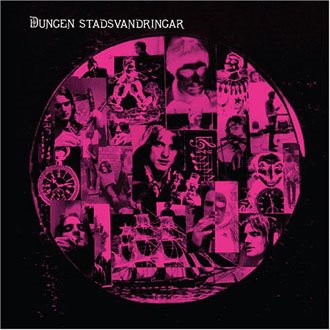 One of the redeeming qualities of the Swedish 70s obsession with musical authenticity was that the country's ethnic music (mainly fiddle-based) was rediscovered and reimagined by young people. There were good psychedelic takes on this stuff already at the time, notably by Kenny Håkansson and Kebnekaise who are still a great live act. But in my opinion, the best Swedish ethnic psych album is Dungen's Stadsvandringar from 2002 (it means "Strolls through the city"). And the band leader was born only in 1979, after the records that would come to influence him had been in the stores for years. But I don't need to tell you about Dungen, they were on Conan O'Brien a year ago. And they have a new album due next year.
So: Pugh Rogefeldt, funky Swedish psychedelic rock. Qoph, bluesy Swedish psychedelic rock. And Dungen, ethnic Swedish psychedelic rock. You know you need them to finally manifest your minds.
[More blog entries about music, rock, pop, psychedelic, Sweden; musik, rock, pop, psykedelisk.]
Labels: music, pop, psychedelic, rock, Sweden
posted by Martin at 22:08
2 comments


